 EN

Keep perfume away from extension hair
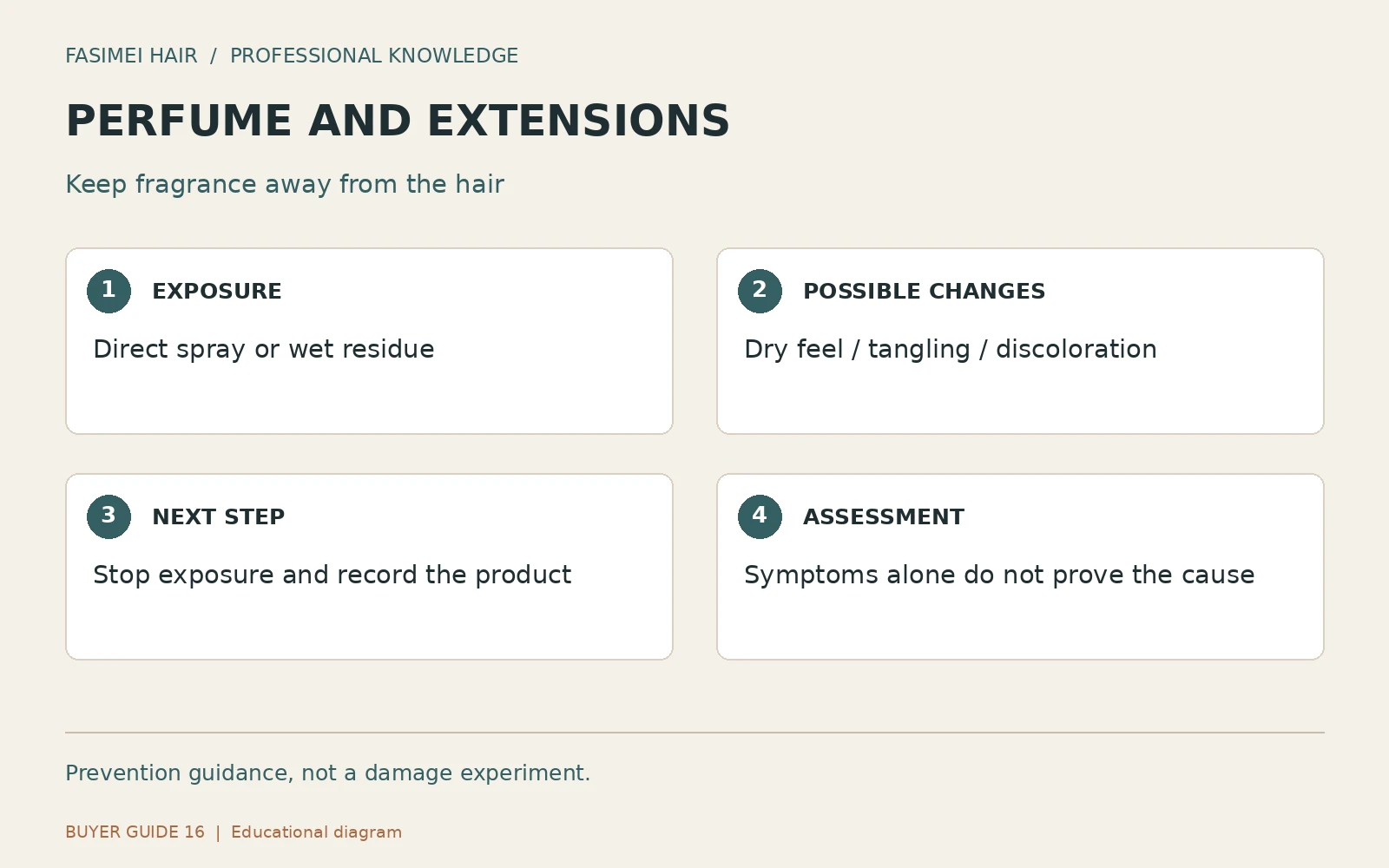
Fasimei does not recommend spraying perfume directly onto human hair extensions. A fragrance designed for skin is not automatically suitable for processed hair, tape adhesive or keratin attachments. The practical approach is to keep the spray and any wet residue away from the hair, rather than trying to identify a universally safe number of sprays.
One accidental exposure does not prove that the hair has been permanently damaged. Equally, a pleasant smell or a product described as luxurious does not establish compatibility. Risk depends on the complete formula, amount applied, contact location, frequency and condition of the extensions. This guide explains precautions, not the results of a Fasimei perfume laboratory study.
What changes should clients watch for
Possible concerns include a dry or rough feel, increased tangling, residue and changes in appearance or color. These signs are not specific to perfume: heat, washing products, water quality, friction and previous chemical services can produce overlapping symptoms. Do not diagnose the cause from a photograph alone.
High-alcohol styling products are discouraged in some professional extension-care guidance because of dryness and attachment concerns. That supports caution, but it does not mean every ingredient with “alcohol” in its name behaves identically. Fatty alcohols used in conditioners are different from the volatile alcohol often used as a fragrance solvent. The finished formulation matters more than one word on the label.
Why blonde hair and attachments need separate attention
Light-colored extensions can make a small color change easier to notice. Some extension manufacturers specifically advise avoiding contact with perfume and other beauty products because discoloration can occur. This is a reason for prevention, not proof that every perfume turns every blonde extension pink or orange.
Attachment performance is a separate question from hair color. Perfume should not be used to clean tape tabs, soften keratin bonds or mask an odor around the roots. Solvents and oily residues may be incompatible with a particular attachment system; their effects cannot be predicted from the fragrance name. Follow the attachment supplier’s instructions and ask the installer when uncertain.
Use fragrance without coating the hair
If you choose to wear perfume, apply it away from the hair and prevent spray drift or contact with wet fragrance. Keep long extensions away from fragranced neck and shoulder areas until the product is dry. Avoid spraying scarves or clothing where the hair will rub against a concentrated deposit; check the fragrance manufacturer’s fabric advice separately.
Do not spray perfume onto a brush and comb it through extensions. Do not walk through a fragrance cloud as a workaround. A “hair perfume,” “natural,” “oil-based” or “alcohol-free” label is not a compatibility certificate. Ask the extension supplier about the exact finished product before use. A fragrance-free routine avoids adding this exposure in the first place.
What to do after accidental contact
Stop applying the product and record its name, ingredient list, contact area and timing. If the extensions feel different or change color, photograph them in consistent lighting before trying corrective treatments. Follow your stylist’s normal cleansing advice; do not immediately use bleach, dish detergent, strong clarifiers or solvent removers on the hair.
If attachments become loose, sticky or uncomfortable, arrange a professional inspection rather than pulling on them or adding household glue. If an exposure causes skin irritation, stop using it and seek appropriate medical advice. For persistent tangling, read why hair extensions tangle after washing and keep the product history available so the salon can investigate several possible causes.
How salons should explain Fasimei aftercare policy
Explain the fragrance precaution before installation and give clients a written copy. Ask them to mention perfume, sunscreen, self-tan, swimming, toners and styling products if a problem develops. This makes the review more useful than simply asking whether they followed “good care.” Use how to document a hair extension quality complaint to organize the evidence.
Fasimei does not recommend using perfume on its extensions. Tangling or discoloration caused by perfume exposure is excluded from Fasimei’s commercial after-sales coverage, subject to applicable statutory rights. Reporting perfume use alone does not establish causation; the exposure history and product condition should be reviewed. If you need care guidance for a wholesale range, discuss your product requirements with Fasimei before finalizing the client instructions.
Frequently Asked Questions
Will one spray ruin my extensions?
Not necessarily. Stop further exposure and assess the condition; neither guaranteed safety nor permanent damage can be inferred from one spray.
Is alcohol-free perfume safe?
Not automatically. Oils, fragrance ingredients and residues may still be unsuitable for the hair or attachment system.
Can I use perfume to cover an unpleasant smell?
No. Ask your stylist to investigate cleansing, drying and attachment condition rather than masking the cause.
Does perfume exposure automatically invalidate every claim?
No. The stated exclusion concerns perfume-caused tangling or discoloration, not every unrelated issue. Applicable statutory rights remain unaffected.
Further Reading
Beauty Works: Terms of Sale Hair Discolouration
INH Professional: Heat Styling and Everyday Styling
Great Lengths Australia and New Zealand: Hair Extension Maintenance