 EN


A hair extension specification sheet should describe what the supplier is expected to deliver and how the buyer will evaluate it. Product names alone are insufficient. Two offers for a blonde Genius Weft can differ in net weight, weft width, end fullness and color placement. A written specification makes those differences visible before payment.
Start with one product and one revision number. Record the buyer, supplier, intended professional use and approval date. Keep the approved sample reference with that document so a later discussion refers to the same product.
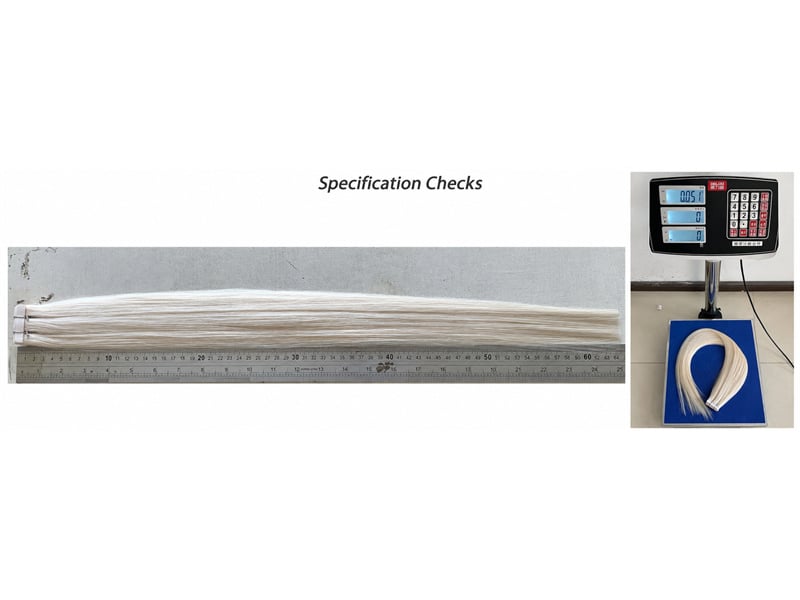
Record the extension method, finished length, measurement method and net hair weight. Clarify whether packaging, tape backing or attachment components are included in the stated weight. Agree on tolerances rather than assuming every piece will be identical.
For color, include the shade reference, root depth and transition requirements. A rooted blonde needs more information than a color number. Attach photographs for orientation, but use an approved physical reference for final matching where possible.
Specify the expected distribution of shorter strands and the appearance of the ends. Terms such as double drawn should be supported by an agreed visual sample or a defined measurement procedure. Do not treat a grade label as a universal percentage.
For wefts, record width, seam profile and cutting instructions. For tape-ins, record tape dimensions and backing type. For pre-bonded products, record bond shape, strand weight and the compatible installation system. These are separate from the quality of the hair itself.
Ask both parties to confirm the same revision before the sample is produced. Record deviations and decide whether each difference is accepted, corrected or subject to further testing. A conversation in several messaging threads is difficult to reproduce during production.
Use a controlled hair extension sample test to evaluate the approved specification. Once the sample passes, retain an identified reference and state which requirements apply to the bulk order.
Changing the length, shade or construction after approval creates a new specification. Record who approved the change and whether a replacement sample is required. Avoid silently combining a new color with an older construction approval.
When comparing Genius Weft hair extensions, send the same specification to each supplier. Ask Fasimei to discuss your product requirements with your team before sampling. A precise request is more useful than asking for the best available hair.
No. A quotation sets out commercial terms; the specification describes the product and acceptance method. Reference both documents in the order.
Use a shared base specification with clearly identified shade requirements where practical. Give special root and dimensional colors their own references.
A retained sample is useful, but written dimensions and acceptance methods are still needed for details that cannot be judged consistently by eye.